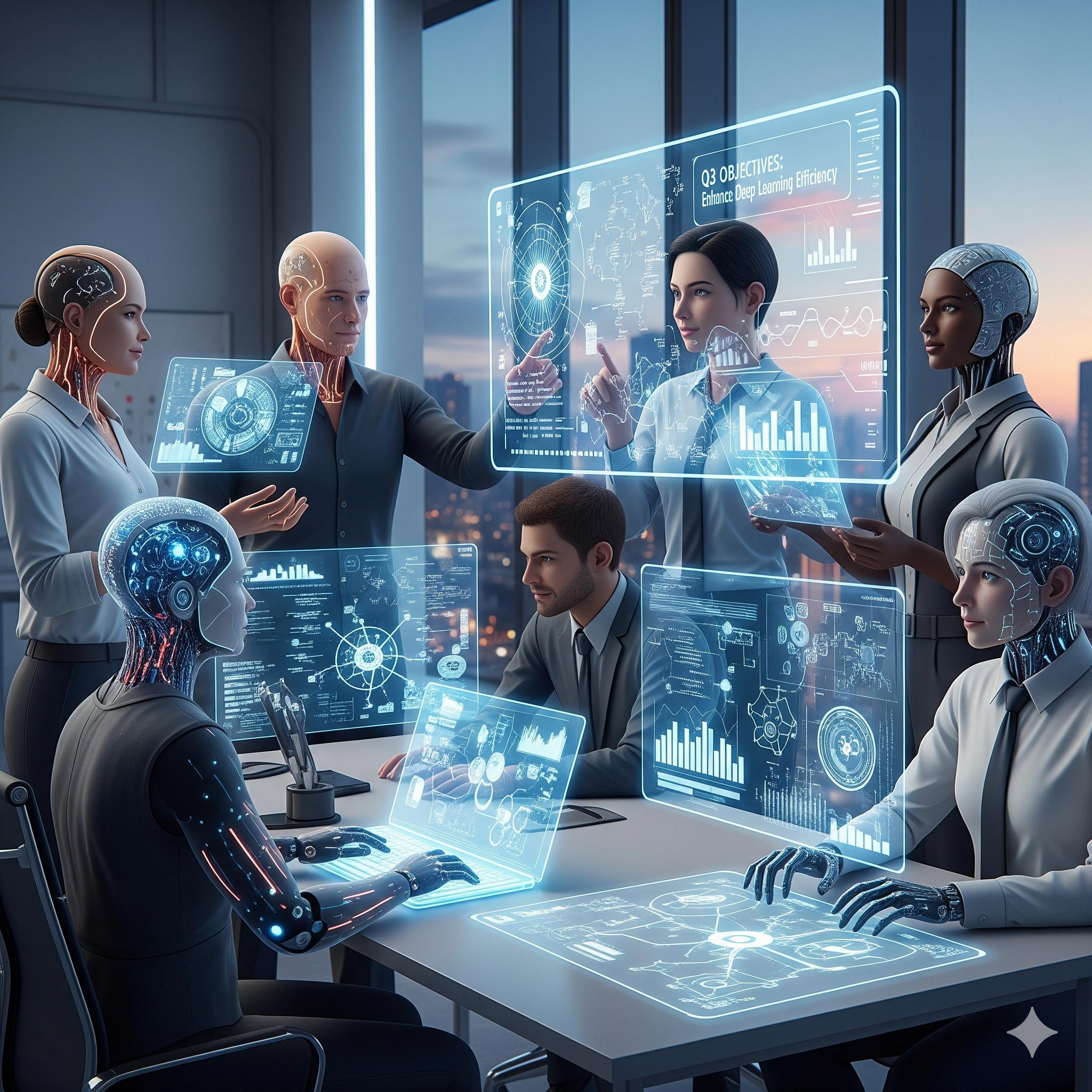
Future of Artificial Intelligence has moved from science fiction to your smartphone. From Netflix recommendations to medical diagnoses, AI systems now influence decisions that shape our daily experiences. But we’re still in the early chapters of this technological revolution.
AI refers to computer systems that can perform tasks typically requiring human intelligence—learning, reasoning, and problem-solving. What started as simple rule-based programs has evolved into sophisticated neural networks that can recognize images, understand speech, and even generate creative content.
The current AI landscape spans everything from virtual assistants like Siri and Alexa to complex algorithms that detect fraud in banking transactions. Machine learning models power search engines, social media feeds, and autonomous vehicles. Yet experts agree we’ve barely scratched the surface of AI’s potential.
Understanding where AI is heading requires examining both its current capabilities and the obstacles that still need to be overcome. The decisions we make about AI development today will determine whether this technology becomes humanity’s greatest tool or its biggest challenge.
Current State of AI: Where We Stand Today
Machine Learning Breakthroughs
Machine learning has become the backbone of modern AI systems. Deep learning networks, inspired by the human brain’s structure, can now process vast amounts of data and identify patterns that humans might miss entirely.
Recent advances in transformer models have revolutionized natural language processing. GPT models can write essays, answer complex questions, and even generate computer code. These systems demonstrate emergent abilities—capabilities that weren’t explicitly programmed but arise from their training process.
Computer vision has reached remarkable milestones. AI systems can now identify objects in images with greater accuracy than human observers in many cases. Medical imaging applications can detect early-stage cancers, while autonomous vehicles use computer vision to navigate complex traffic scenarios.
Natural Language Processing Evolution
The ability of machines to understand and generate human language has improved dramatically. Modern language models can translate between dozens of languages, summarize lengthy documents, and engage in contextual conversations that feel increasingly natural.
Conversational AI has evolved beyond simple chatbots. Today’s systems can maintain context across extended interactions, understand nuanced requests, and provide personalized responses based on user preferences and history.
Voice recognition technology now works reliably in noisy environments and can distinguish between different speakers. This progress has enabled voice-controlled smart homes and hands-free computing interfaces that respond to natural speech patterns.
AI Transforming Key Industries
Healthcare Revolution
AI is reshaping medical practice at every level. Diagnostic imaging powered by machine learning can identify conditions like diabetic retinopathy and skin cancer with accuracy matching or exceeding specialist doctors. These tools are particularly valuable in underserved areas where specialist expertise may be limited.
Drug discovery, traditionally a process taking decades and costing billions, is being accelerated by AI models that can predict molecular behavior and identify promising compounds. AI has helped identify potential treatments for COVID-19 and other diseases in record time.
Personalized medicine benefits from AI’s ability to analyze genetic data, medical histories, and lifestyle factors to recommend targeted treatments. This approach moves beyond one-size-fits-all solutions toward precision healthcare tailored to individual patients.
Financial Services Transformation
Banking and finance rely heavily on AI for fraud detection, risk assessment, and algorithmic trading. Machine learning models analyze transaction patterns in real-time, flagging suspicious activity before financial damage occurs.
Robo-advisors use AI to manage investment portfolios, making financial planning accessible to people who might not otherwise afford professional advisory services. These systems can rebalance portfolios, optimize tax strategies, and adjust risk levels based on market conditions.
Credit scoring has been enhanced by AI models that consider alternative data sources beyond traditional credit reports. This expansion helps provide financial services to previously underserved populations while maintaining appropriate risk management.
Transportation and Mobility
Autonomous vehicles represent one of AI’s most visible applications. Self-driving cars use a combination of sensors, computer vision, and machine learning to navigate roads, avoid obstacles, and make split-second driving decisions.
Traffic management systems powered by AI optimize signal timing, reduce congestion, and improve fuel efficiency across urban networks. These smart city applications demonstrate AI’s potential to solve complex logistical challenges at scale.
Logistics and delivery services use AI for route optimization, demand forecasting, and warehouse automation. Companies like Amazon and UPS save millions of dollars annually through AI-powered efficiency improvements.
Entertainment and Media
Content recommendation engines have transformed how we discover movies, music, and news. Streaming platforms use sophisticated algorithms to analyze viewing patterns and suggest content that matches individual preferences.
AI-generated content is becoming more sophisticated. From automated news articles to AI-composed music, creative industries are exploring how Future of Artificial Intelligence can augment human creativity rather than replace it.
Gaming industries use AI for creating realistic non-player characters, generating procedural content, and personalizing difficulty levels to maintain player engagement.
Challenges and Limitations Facing AI
Ethical Concerns and Bias
AI systems often reflect the biases present in their training data. Facial recognition systems have shown higher error rates for people with darker skin tones, while hiring algorithms have demonstrated gender and racial biases that perpetuate discrimination.
Privacy concerns arise as AI systems require vast amounts of personal data to function effectively. The tension between personalization benefits and privacy protection continues to generate debate among policymakers, technologists, and users.
Algorithmic transparency presents another challenge. Many AI systems operate as “black boxes,” making decisions through processes that even their creators cannot fully explain. This opacity makes it difficult to ensure fairness and accountability.
Job Displacement Concerns
Automation powered by AI threatens to displace workers in various industries. Manufacturing, customer service, and data entry roles are particularly vulnerable to AI replacement. However, historical precedent suggests that technological advances also create new types of employment opportunities.
The pace of AI adoption may outstrip workers’ ability to retrain for new roles. This transition period could create significant economic disruption, particularly for workers in routine or predictable jobs.
Skills gaps are emerging as demand grows for AI specialists, data scientists, and workers who can collaborate effectively with AI systems. Educational institutions are struggling to keep pace with rapidly evolving technological requirements.
Technical Limitations
Current AI systems excel at narrow, specific tasks but struggle with general intelligence that humans take for granted. An AI that masters chess cannot transfer that knowledge to checkers without additional training.
Data dependency remains a significant constraint. AI systems require large amounts of high-quality training data, which may not be available for all applications or may be prohibitively expensive to collect.
Energy consumption by large AI models raises sustainability concerns. Training sophisticated language models can consume as much electricity as hundreds of households use in a year.
Future Trends Shaping AI Development
Quantum Computing Integration
Quantum computers could exponentially increase AI processing capabilities. Quantum’s machine learning algorithms may solve optimization problems that are currently intractable for classical computers.
Quantum-enhanced AI could revolutionize cryptography, drug discovery, and financial modeling. However, practical quantum computers remain experimental, and widespread deployment is likely years away.
The intersection of quantum computing and AI represents a frontier that could unlock entirely new categories of Future of Artificial Intelligence applications.
Edge AI and Distributed Computing
Moving AI processing from centralized cloud servers to local devices offers benefits in speed, privacy, and reliability. Edge AI enables real-time decision-making without requiring internet connectivity.
Smartphones, smart speakers, and IoT devices increasingly incorporate dedicated AI chips that can run machine learning models locally. This trend reduces latency and keeps sensitive data on user devices.
Distributed AI systems may enable more resilient and scalable applications by spreading computational load across networks of connected devices.
Artificial General Intelligence (AGI)
AGI represents AI systems with human-level cognitive abilities across diverse domains. Unlike current narrow AI, AGI would demonstrate flexible problem-solving, creativity, and learning capabilities comparable to human intelligence.
Timelines for achieving AGI remain highly speculative, with expert predictions ranging from decades to over a century. The technical challenges of creating truly general intelligence are immense and may require fundamental breakthroughs in our understanding of cognition.
The potential impact of AGI would be transformative across all aspects of human society, making it one of the most significant technological developments in human history.
Impact on Society: Preparing for Change
Transformation of Work
AI will likely automate routine tasks while creating demand for roles requiring creativity, emotional intelligence, and complex problem-solving. Workers may need to adapt by developing skills that complement rather than compete with AI capabilities.
Human-AI collaboration models are emerging where people and machines work together, each contributing their unique strengths. This partnership approach may prove more effective than complete automation in many contexts.
Remote work technologies enhanced by AI could reshape employment geography, allowing talented individuals to contribute regardless of their physical location.
Educational Evolution
Educational systems must adapt to prepare students for an AI-enhanced world. This includes both technical skills for working with AI systems and critical thinking skills for evaluating AI-generated information.
Personalized learning platforms powered by AI can adapt to individual student needs, potentially making education more effective and accessible. However, this also raises concerns about data privacy and algorithmic bias in educational settings.
Lifelong learning becomes essential as AI accelerates the pace of technological change. Traditional models of front-loaded education followed by stable careers may give way to continuous skill development throughout working life.
Daily Life Integration
Smart home systems will become more sophisticated, anticipating resident needs and optimizing energy usage, security, and comfort automatically. AI assistants may evolve into comprehensive life management tools.
Healthcare monitoring through wearable devices and AI analysis could enable preventive medicine approaches that catch health issues before symptoms appear.
Transportation systems integrated with AI could reduce traffic accidents, optimize commutes, and make mobility more accessible for elderly and disabled populations.
Building Tomorrow’s AI Landscape
The future of artificial intelligence depends on the choices we make today. Technical development must be balanced with careful consideration of ethical implications, social impact, and human values.
Successful AI integration requires collaboration between technologists, policymakers, educators, and society at large. We need frameworks for ensuring AI development serves broad human interests rather than narrow commercial goals.
The transformative potential of AI is undeniable, but so are the risks. By approaching AI development with wisdom, caution, and inclusive participation, we can work toward a future where Future of Artificial Intelligence amplifies human capabilities and contributes to human flourishing.
The next chapter of the AI story is still being written. The decisions made in research labs, boardrooms, and legislative chambers over the coming years will determine whether Future of Artificial Intelligence becomes humanity’s greatest achievement or its greatest challenge.